A Visit to Domaine Martin
A visit to the storied Plan de Dieu, shaped by a family rooted in openness, trust, and connection.
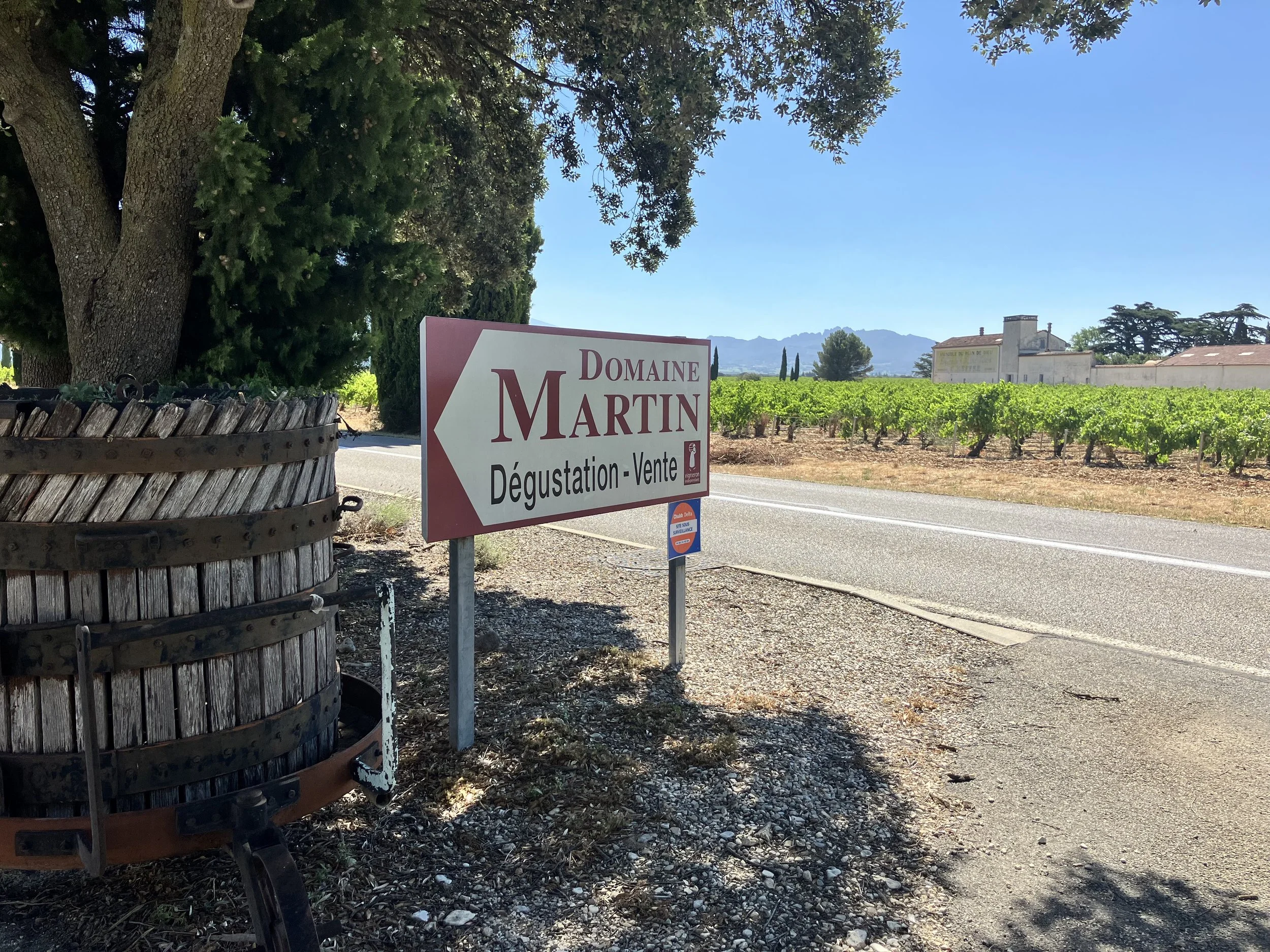
We had been in Provence for about three days when a friend asked if we’d be interested in carpooling to one of the larger nearby cities for a day trip. It was that in-between moment of our stay when the fridge was just full enough to feel settled, but our calendar was still wide open. With a free day ahead, we eagerly agreed. We had been curious about Montpellier but, until then, hadn’t had a reason to visit.
We were driving along a country road between two tiny villages, vines stretching out on either side, a scene that felt perfectly ordinary for this part of Provence. Then our friend pointed out the window toward the symmetrical rows that seemed to go on endlessly.
“This is Plan de Dieu,” she said. “In the Middle Ages, it was a deep, dense forest plagued by bandits and robbers. It was considered so dangerous that, to cross it, people said you had to pray to God to make it through safely.”
I sat in the backseat, staring out the window, trying to put myself in the space when it was nothing but a forest.
The idea fascinated me, and I wanted to know more.
I later discovered that during the papal residency in Avignon from 1309 to 1377, this particular forest served as a passageway for merchants traveling to and from the city. Bandits and robbers saw these journeys as a golden opportunity, capturing travelers and holding them for ransom. As stories of danger spread, those who dared to cross the forest were said to place all of their faith in God to guide them safely through.
Today, Plan de Dieu sits at the foothills of the Dentelles de Montmirail, resting on a broad plain of nearly 3,000 acres and stretching across four villages in the Vaucluse. Yet despite its long and storied past, it was not until 2005 that the area officially earned its classification as Côtes du Rhône Villages. That recognition elevated the region’s visibility while still keeping it more under-the-radar than its famous neighbors, like Châteauneuf-du-Pape or Gigondas.
As I began to shape the idea for a series focused on family-run domaines in my own backyard, I knew I had to include one from the Plan de Dieu region.
As an amateur wine drinker, I once assumed it was typical for a wine producer to farm a single vineyard in one location, but as I began researching domaines in the region, I quickly learned that many worked with parcels spread across several villages throughout Provence. Sometimes these plots were inherited through generations of family ownership, while in other cases they were intentionally chosen to create a more diverse range of vines and grape varieties. Each location brought its own soil, climate, and geography, shaping wines with distinct character and personality.
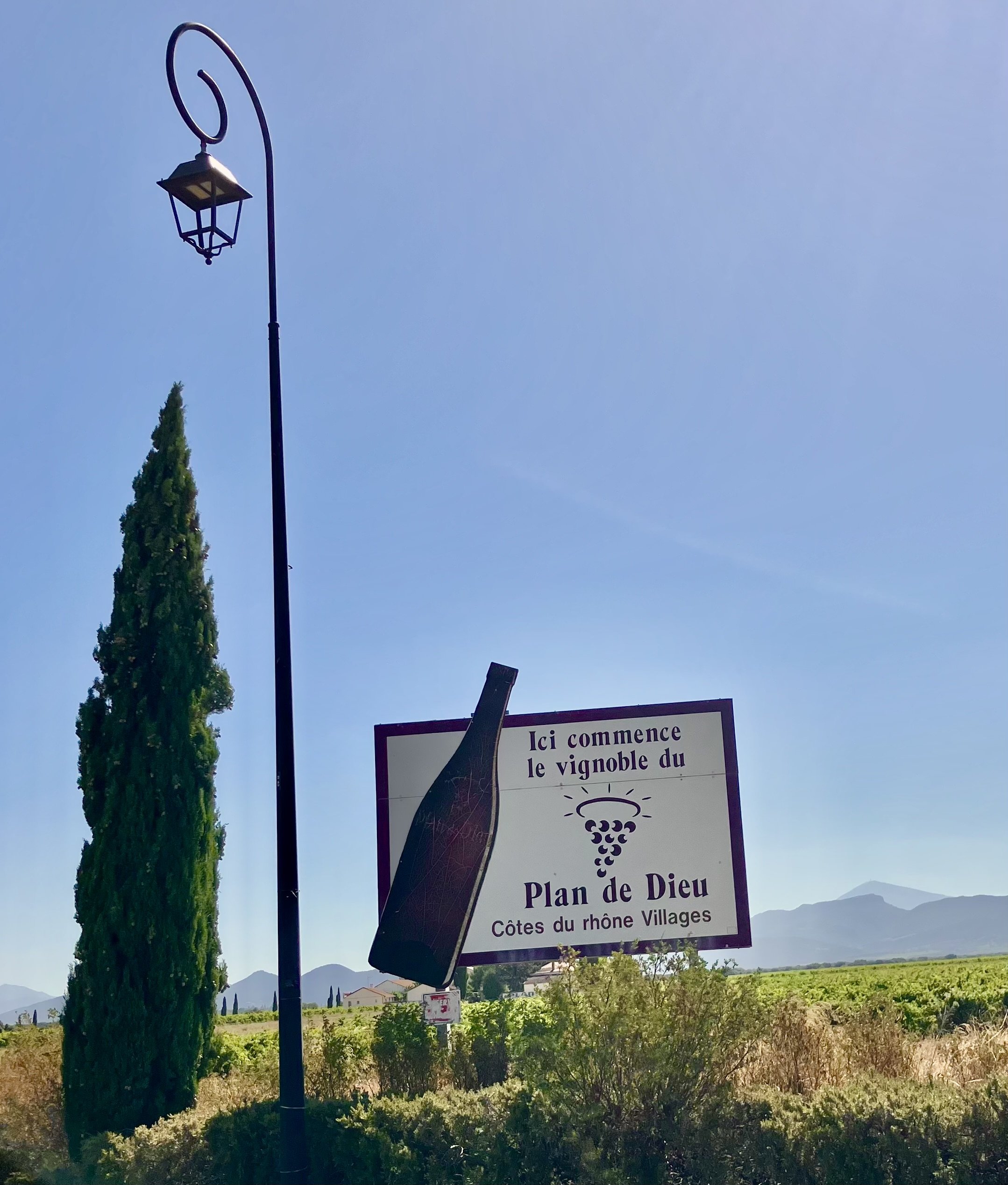
In the case of Plan de Dieu, the soil was composed of rounded stones and sandy clay that retained heat and helped grapes ripen evenly. Paired with a hot, dry climate and the steady influence of the mistral winds, the region offered ideal conditions for Grenache, Syrah, and Mourvèdre. As I looked more closely at producers there, I discovered that Plan de Dieu was not a standalone appellation, but a clearly defined geographic sub-region within the broader Côtes du Rhône Villages designation. Wines labeled Côtes du Rhône Villages Plan de Dieu came specifically from this sun-soaked plain, reflecting a shared terroir that gave the area its distinct identity and well-earned place among the Rhône’s notable wine regions. What this also meant was that while a domaine might farm vines within Plan de Dieu, its production facilities and tasting room were often located in nearby villages rather than directly on the vineyards themselves.
As I began narrowing down which domaine to feature from the Plan de Dieu, I found myself drawn less to labels and accolades and more to the feeling I wanted this story to convey. I wanted to choose a place that felt genuine and quietly representative of the region I call my backyard, one that reflected how wine is made through generations of care, patience, and love for the land. Domaine Martin stood out almost immediately. As I followed the timeline of the domaine on their website, it became clear that each generation had left its mark, thoughtfully building upon the work of those before them rather than reinventing it. There was something refreshingly unpretentious about it, a sense that the focus was firmly on the vines, the land, and the work passed down through generations rather than on presentation or marketing. It felt like the right place to represent the Plan de Dieu.
We decided to visit Eric one morning just as the tasting room opened. Not wanting to appear too American, we arrived a few minutes after our proposed time and lingered outside, taking a few photos before finally opening the door and stepping inside.
Much to our surprise, the tasting room was not only busy, but the countertop was lined with glasses at various stages of being tasted and set aside. A friendly, boisterous group stood chatting animatedly with the man behind the bar and, as we entered further into the space, pulled him out from behind the counter to pose for photos with them.
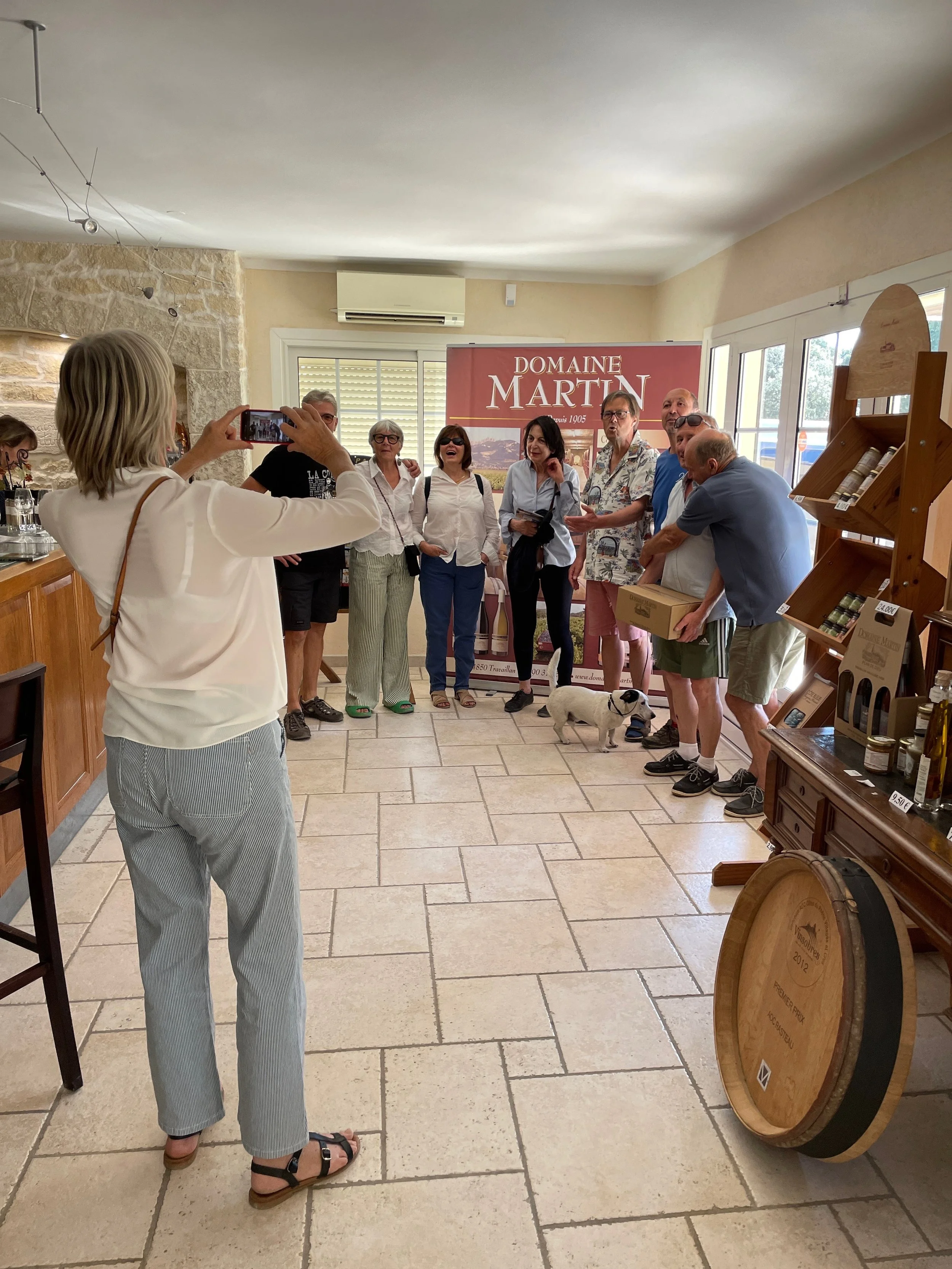
One thing I love about Andy is that, no matter where we are, he will always offer to take a photo for a group so that everyone can be included. I watched from across the room as he leaned in and gestured with his hands that he could take the photo if the photographer would like to be included. The woman smiled and nodded, handing him her phone, then jaunted across the room to join the others. I wandered over and stood quietly behind Andy, watching him frame the shot without wanting to interrupt. After a few clicks, the group dispersed, and the woman returned to collect her phone, still smiling.
In perfectly British-accented English, she explained that they were from Brittany and had come to stock up. Almost on cue, case after case was stacked along the bar as goodbyes began to flow and different members of the group grabbed a box and headed out to the car. In the midst of the bustle, another man stepped through the crowd of visitors, his eyes scanning the room as if taking it all in. This must be Eric, I thought.
This was my first and only tasting that I had booked where the owner did not speak English. Part of me felt a sense of nerves not felt in the other meetups. What if the meeting was surface level, based off of the language barrier? I wanted to understand everything he wanted to share about his generations-owned domaine.
Domaine Martin was only my second visit while gathering stories for this series. I knew that most of my readers were English speakers and that this series was meant to offer approachable, low-stress ways to explore wine tasting at small, family-run domaines. Still, it felt important to include at least one place that held closely to its French roots and authentic charm. This visit was for the more adventurous readers, those willing to try their French, however limited, and be rewarded with glimpses of village life and wines crafted with the care and devotion that only a small producer can offer.
Our eyes met, and he began walking toward us, a flurry of “bonjours” followed by a few hearty handshakes and we were swiftly led past our newfound wine-loving friends from Brittany and back outside to the parking lot. Eric explained that while the tasting room was located here, production took place just down the road at the home where he and his family lived. As we buckled our dog Milou into the backseat, we waved goodbye to the Bretons and pulled out behind Eric’s van.
Passing the entrance to the village of Travaillan, we continued through the roundabout and turned onto a quiet country road lined with seemingly endless rows of vines.
“What a sweet little town,” I said, glancing back over my shoulder as I typed its name into my search bar.
“Travaillan is located north of Orange and is part of the Comtat Venaissin, a historic region that once belonged to the Papal States. The village’s history stretches back to at least the 12th century, and while the original settlement was once near the Aygues River, a move inland in the 19th century created the village we see today,” I read aloud, offering Andy a bit of a history lesson as he navigated the narrow roads.
When I looked up, I realized we had pulled into a small parking area, yet were still surrounded by vines on one side and a cosy looking home on the other.
“Vous habitez ici?” I asked, pointing toward the beautiful house nestled among the lush vineyards, a little surprised. The setting was so peaceful, it almost didn’t feel real.
He nodded, confirming that he and his family live on the property.
I smiled. This was exactly what I was looking for when I pictured how this article would take shape. A family so engrained in the wine-producing life that they lived on site, eating, sleeping, breathing the craft.
He unlocked a door, leading us into the main location for bottling and production.
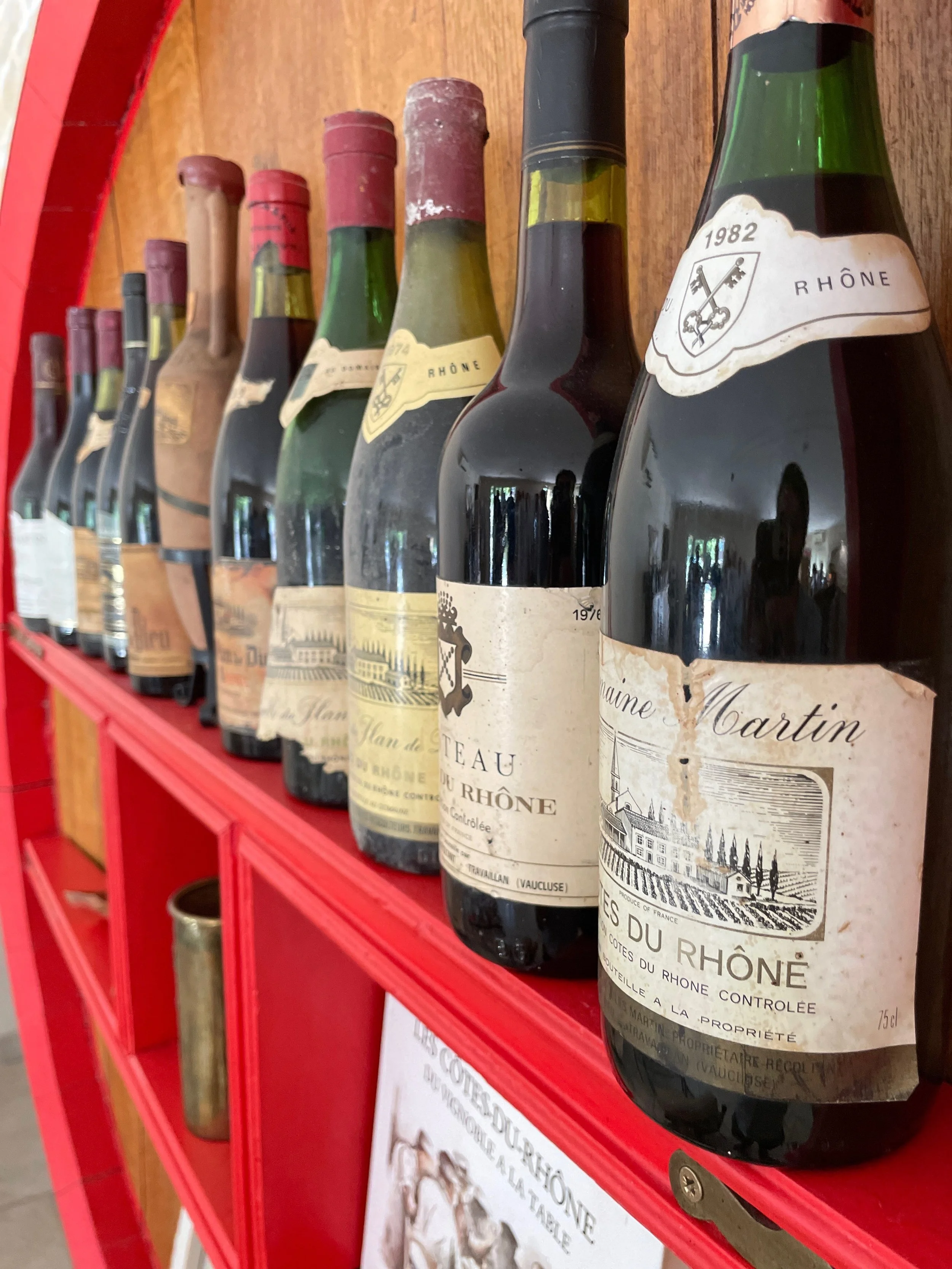
It was 1905 when Julien Martin began the vineyard with just 5 hectares of land (that’s roughly 12.35 acres), but it wasn’t until the 1930’s that Julien’s son, Jules, took over the domaine and acquired new plots of land, expanding the families footing in the wine business. It was also Jules who decided to create his own cellar and keep production in house.
I was surprised how many times we had heard domaine owners say that their parents or grandparents had harvested their grapes and took them elsewhere to begin the vinification process, which turns the grapes into wine. We were also surprised with how many domaines didn’t begin actually producing wine on site until much, much later in the domaine’s history. Compared to some places we visited, Jules was ahead of his time making this change.
While Jules’ sons, René and Yves, did make a few changes in the 60’s, enlarging the cellar and equipping it with more modern bottling production equipment, Eric and another family member, David, have expanded the business, focusing on exporting and bottle sales.
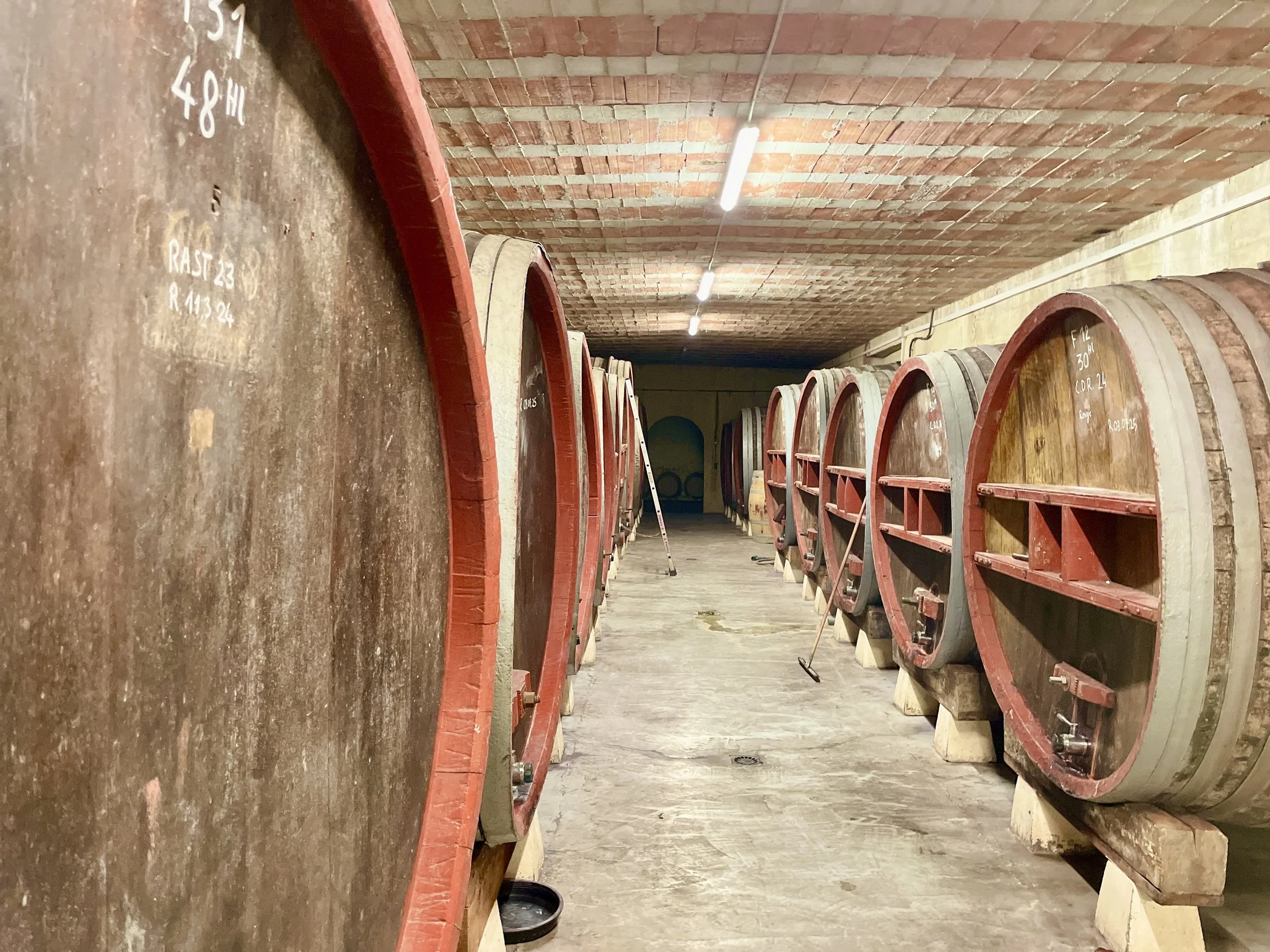
Down a narrow staircase, we stepped into a cellar lined with barrels and filled with that musty, pungent aroma that only aging wine can evoke. We followed closely behind Eric, moving through the space as he pointed out each cluster of barrels, their facades marked in chalky white to note the plots of land from which the grapes had come. Every so often, he paused to explain where each wine was in its process, and how the terroir and grape variety would ultimately shape the final bottle.
I took a moment to absorb the full expanse of the cellar, and the quiet generosity of Eric for stepping away from his day to host us in his personal workspace. As I’ve mentioned before, while I’m still relatively new to understanding wine production, especially here in Provence, I completely understand just how much work small domaines must take on simply to stay afloat. That awareness made the moment feel all the more meaningful. Still, I had sensed even before arriving that Eric was someone open and willing to share the inner workings of the domaine with anyone curious enough to visit.
While others prominently list tasting room hours and occasionally offer guided tours, often for a fee, Domaine Martin’s message felt far more personal. The site gave the impression that the family genuinely wanted to welcome people into their space, not just to share their knowledge, but to build a real connection.
One section in particular stood out while browsing the site. It explained that “because we are committed to building a relationship of trust and respect with our customers, we offer all those who wish a visit to our cellars.” These visits include a full look at the domaine and its production process, from the cultivation of the grapes through to bottling.
It wasn’t something I had given much thought to before reading those words, but the more domaines Andy and I visited, the more we realized how deeply it shaped our experience. Seeing the work behind the scenes deepened our respect not only for the family and their craft, but for the wine itself. A bottle simply means more once you have witnessed the care and effort that goes into it from start to finish, and it became easy to understand why Domaine Martin places such value on building trust and respect with those who come for a tasting.
I found myself thinking back to another section of their website that had lingered with me:“We place an extreme value on human relationship: we are committed to maintaining a quality human relationship by offering you impeccable customer follow-up when ordering from the online store, and by offering an exceptional and memorable experience visiting our cellars.”
While Eric had been undeniably hospitable during our visit, I couldn’t help but wonder if opening his workspace and welcoming visitors into the process was an intentional and essential layer of winemaking for him, one he wanted to make unmistakably clear to anyone browsing the site. As we made our way back into the tasting room after the tour, my thoughts drifted to the moment we first arrived. The group from Brittany had clearly felt a connection to the place and to the wine itself, lingering in conversation and savoring the experience. Standing there again, it was easy to see how those relationships, built quietly and sincerely, were just as much a part of the domaine’s identity as the bottles lining the shelves.
Eric slid back behind the bar and pulled out two glasses, steadying them on the counter as he grabbed the first bottle.
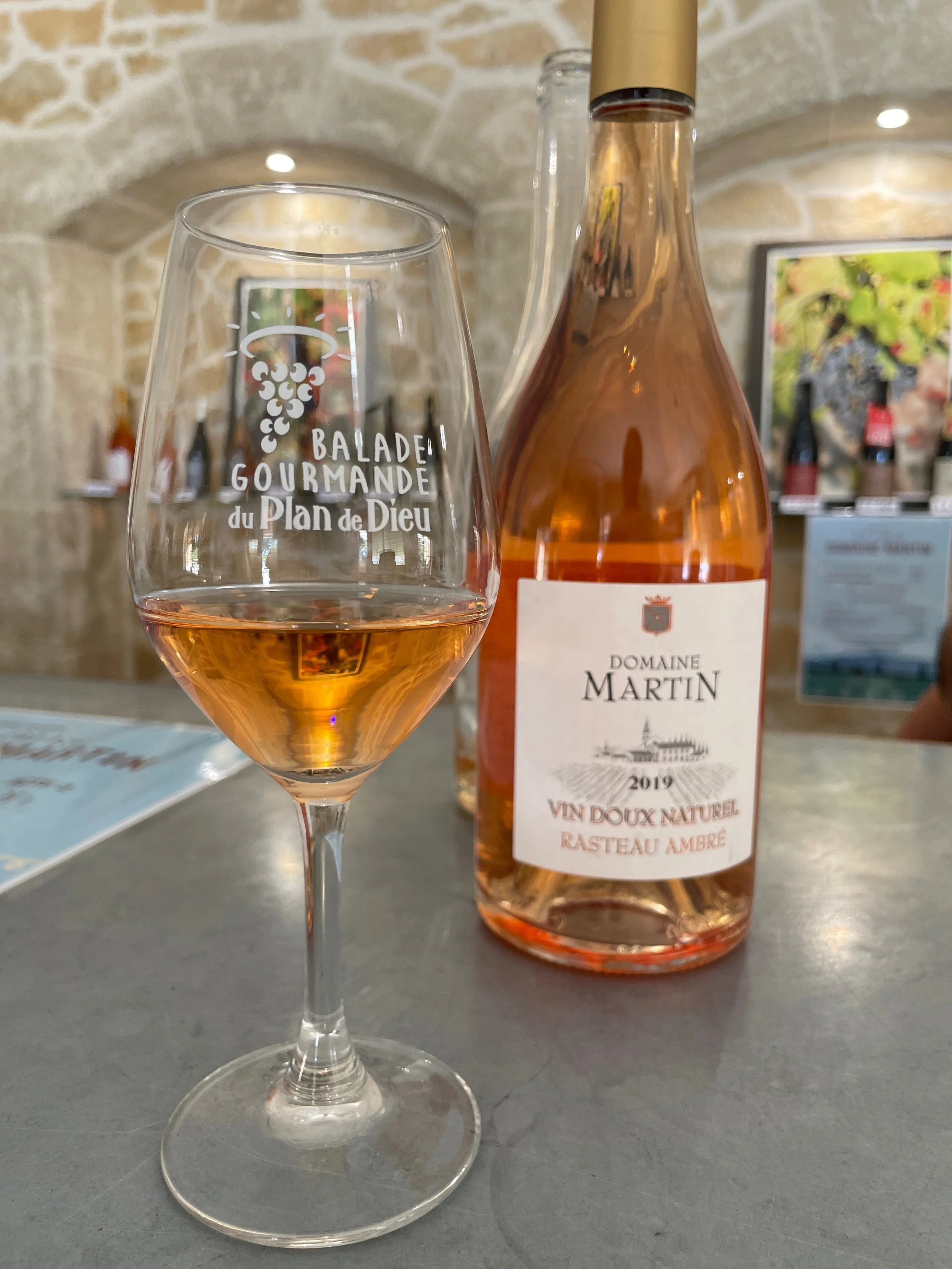
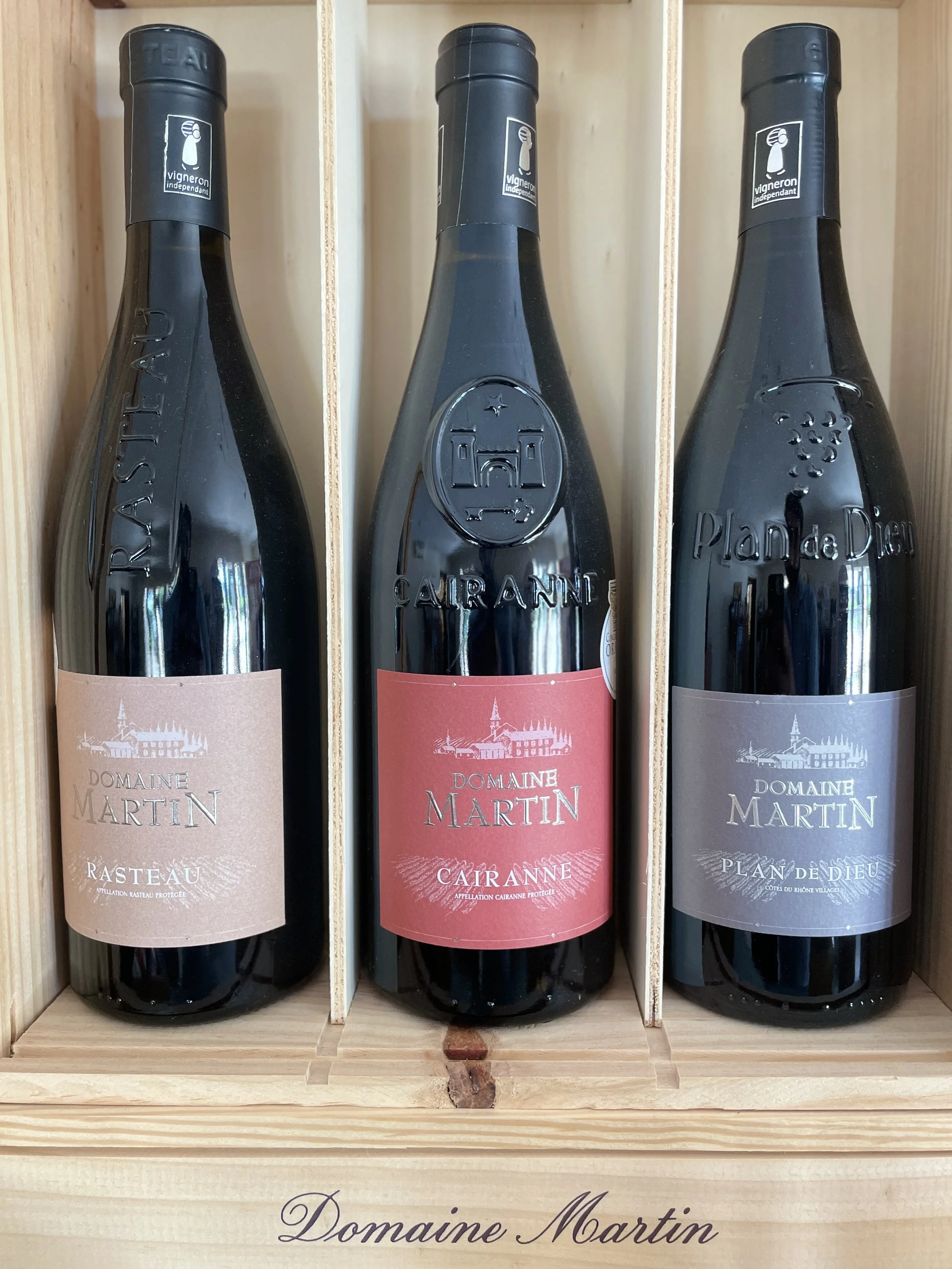
A sweet wine from Rasteau. Though we hadn’t yet visited many domaines, our understanding of wine had already begun to grow. I couldn’t help but smile, thinking back to the first time we had tasted this style, at the very first domaine we visited, how, at that time, it had been unknown to us, and how it now felt instinctively familiar.
But it was another pink bottle that had caught my eye.
“What is this?” I ask, glancing back at Eric.
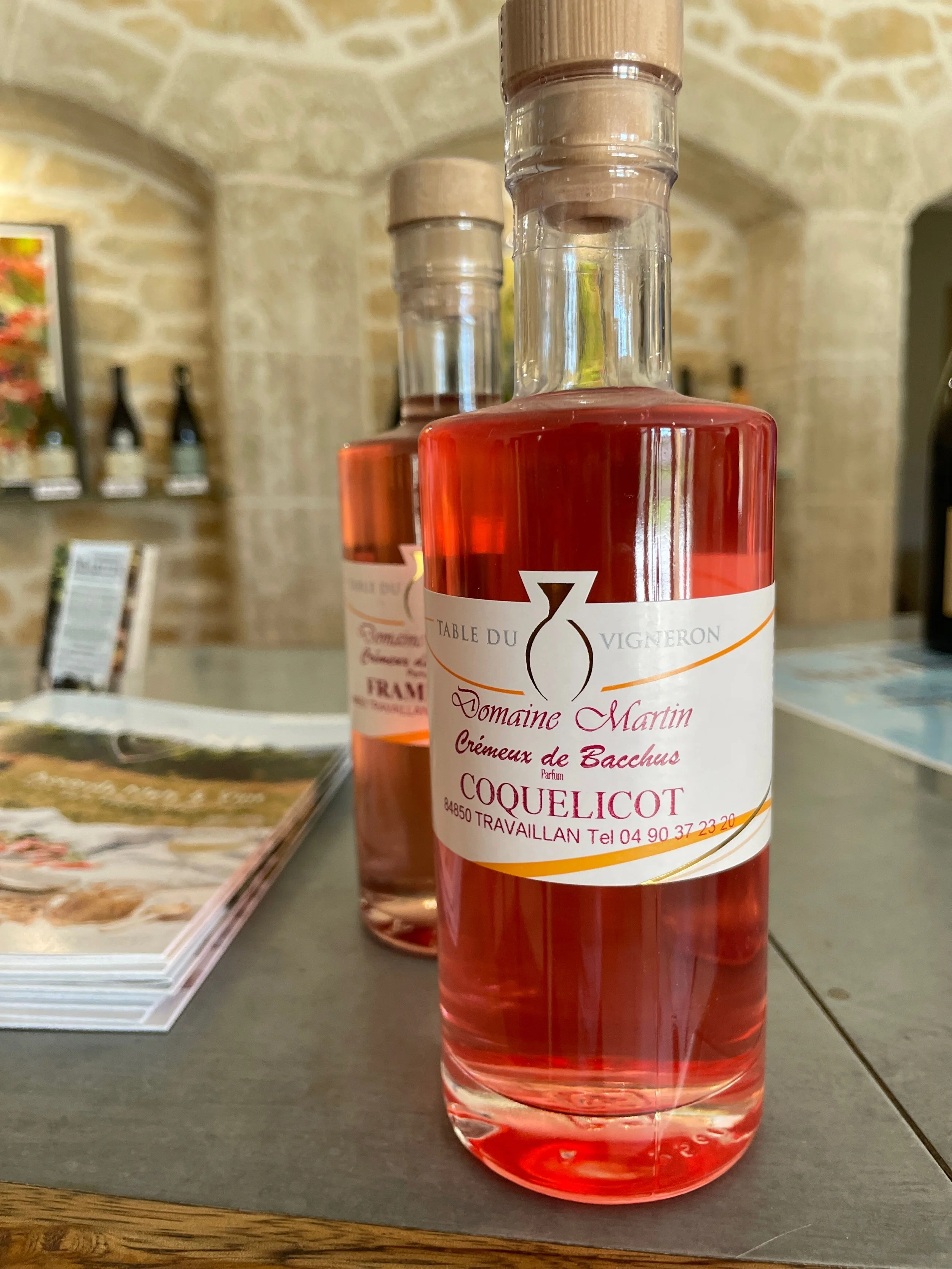
He explained that it was a homemade liqueur, a floral apéritif made from coquelicot.
I smiled, as I translated for Andy, “It’s a poppy flower-flavored liqueur.”
“I’m surprised you knew the word for poppy flower, that’s incredibly specific,” he said, lifting the bottle to inspect it more closely.
“I learned it years ago,” I shrugged. “One of my favorite authors named her house in France Maison Coquelicot when she moved to a small village. I thought it was cute and the word just stuck.”
It was one of the small details I began to notice as we visited more family-run domaines. Alongside the wine, each tasting room offered local, small-batch, artisanal products, which I felt added to their charm and character.
We were brought back into the moment by Eric releasing the cork from the second bottle. Setting it beside the first cork, began to pour the scarlet liquid into our glasses. Andy, seizing the moment for a photo, gathered the corks and carefully arranged them on the bar to show off their markings. Vigneron Indépendant was a designation I had seen throughout Vaucluse during other cave visits, but given the nature of this series, I knew I wanted to learn more.
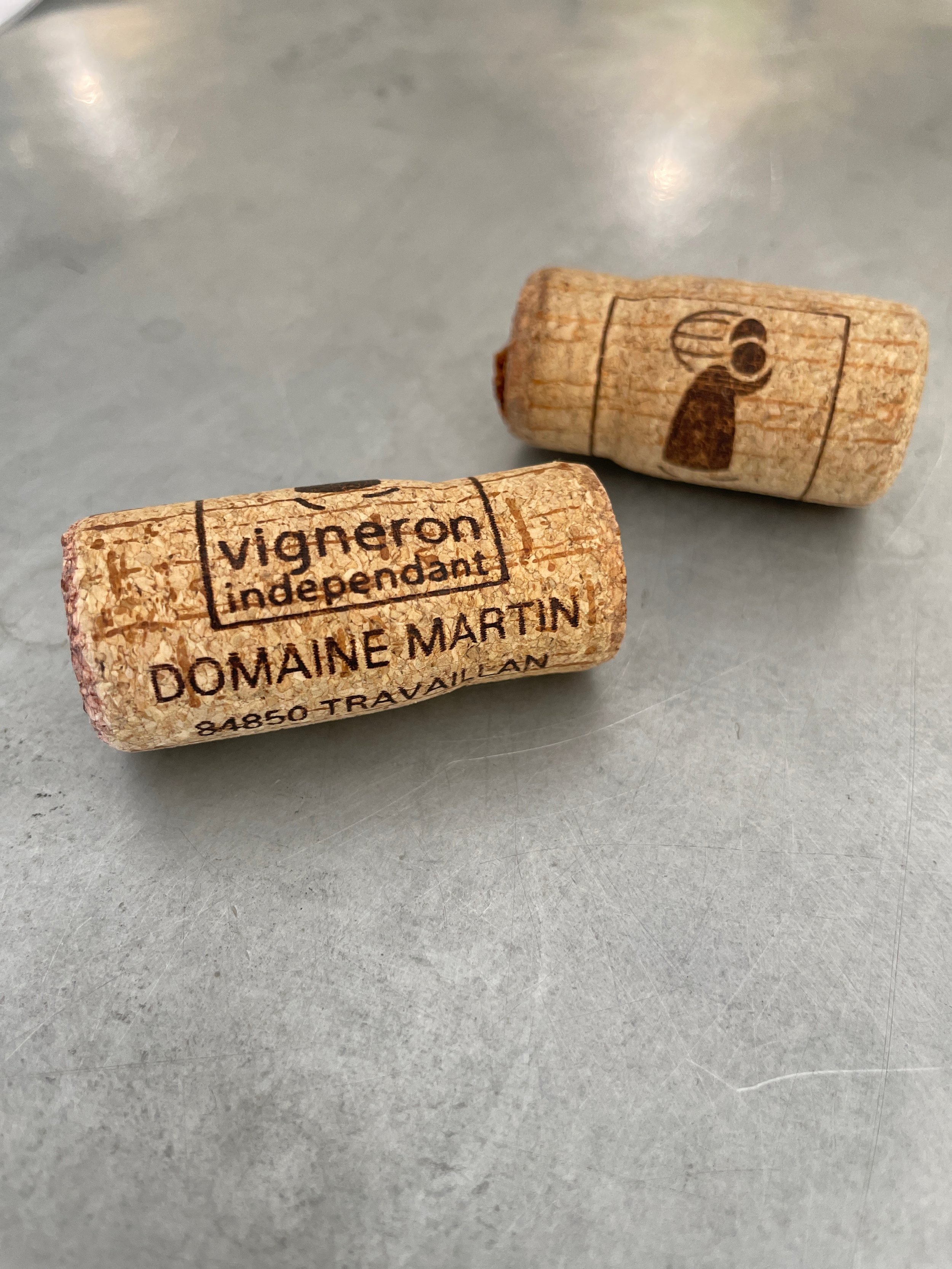
At its core, the designation refers to winemakers who oversee every step of the process themselves, from cultivating their vines to vinifying the wine in their own cellar and selling it directly. The Vigneron Indépendant label represents a deeply personal and hands-on approach to winemaking, one rooted in authenticity, family tradition, and a strong connection to the land. Recognized by its distinctive logo, it signals wines made from start to finish by the same people, often families, who live and work on the estate. For consumers, choosing a wine labeled Vigneron Indépendant means supporting artisanal production, diverse terroirs, and local economies, while enjoying wines that reflect genuine craftsmanship and a direct relationship between the winemaker and the drinker.
This philosophy describes Domaine Martin perfectly. As we finished our final tastings, we thanked Eric once more for welcoming us into his family’s domaine and for trusting us to share their story. When I first began researching domaines in the Plan de Dieu, I assumed the land itself would be the driving force behind this piece. Instead, what stayed with me most was the openness of the domaine and its desire to connect not just wine to place, but people to process, and product to community. It was a reminder that sometimes the most compelling stories in wine are not only rooted in the soil, but in the hands and hearts of those who tend it.
Visit Domaine Martin
Visiting Provence and hoping to enjoy an authentic wine tasting?
Eric and family would be delighted to welcome you.
To set up an appointment for cellar visit, tasting or both, visitors are welcome:
Monday to Saturday, from 9 a.m. to 12 p.m. and from 2 p.m. to 6 p.m., excluding holidays.
by phone at 04 90 37 23 20,
by email to martin@domaine-martin.com