A Visit to Domaine Amandine
A visit where a new generation builds upon a legacy shaped over decades.
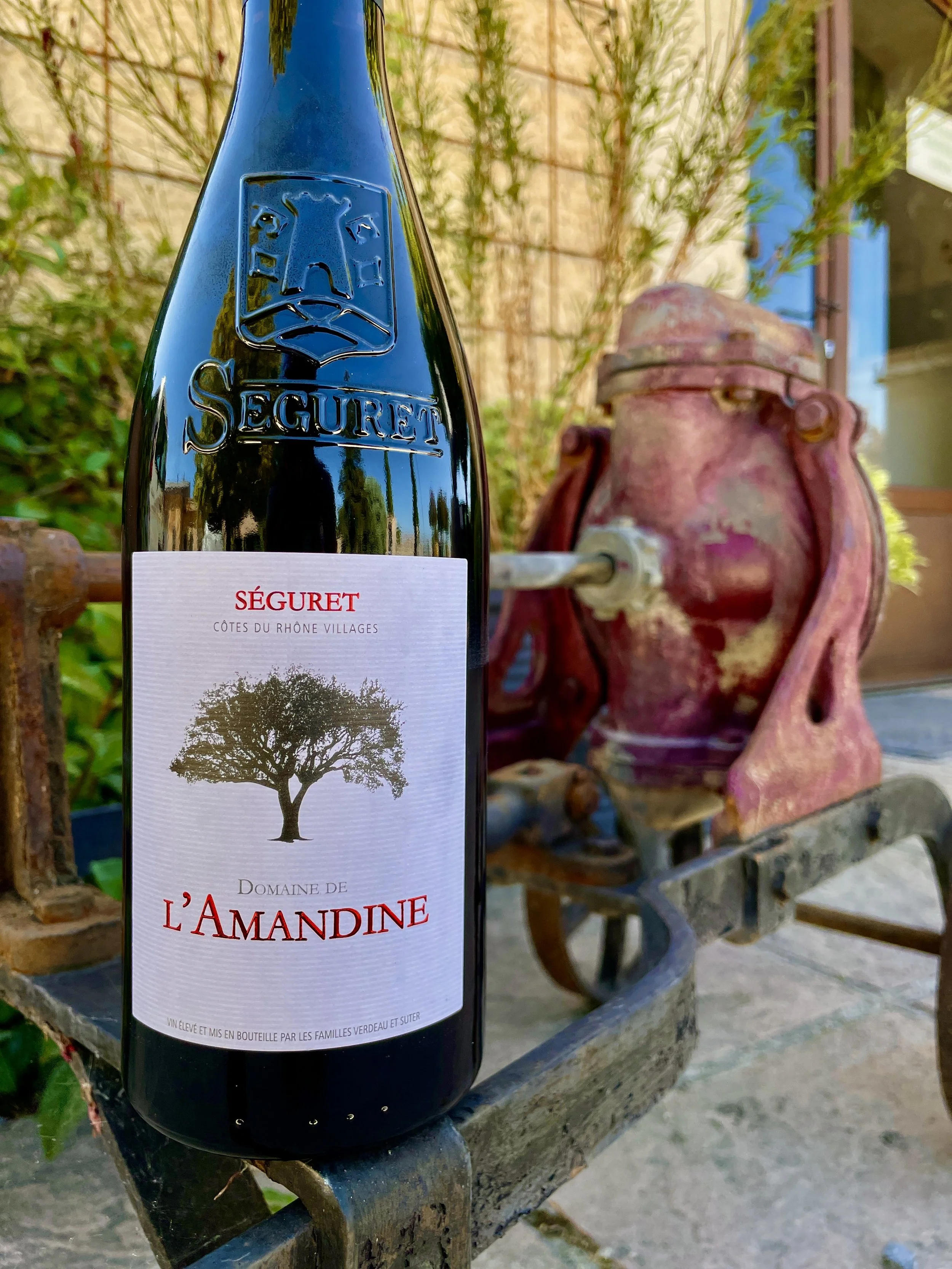
The power of a French lunch is almost indisputable. Beyond its restorative nature, with its quiet ability to pause the noise of the day, it offers something more lasting. A good French lunch, especially when shared with friends, has a way of shifting your perspective entirely, leaving you often with a different outlook than the one you carried in.
Such was the case at the beginning of July, when I found myself lingering over a long lunch with two friends from neighboring villages.
When the conversation turned, unexpectedly, to my blog, I felt that familiar flutter of nerves. I spoke about it casually at first, offering only a few details before quickly turning the attention elsewhere. Writing for strangers has always felt easier somehow. Their distance creates a kind of safety. But sitting across from people whose reactions I could actually see, people a little older than me, made me suddenly self-conscious in a way I hadn’t expected. I worried about sounding presumptuous, like another younger person convinced their thoughts deserved an audience.
The truth is, I have never really seen myself as an authority on Provence. If anything, I write because I am not one. I experience the region as an outsider still learning it, someone who notices small details, asks questions, lingers longer than a local might. That perspective has always felt more honest to me. Less polished, perhaps, but also more human. I never wanted my writing to feel like a guide delivering answers so much as an invitation to look closer alongside me.
So, when my blog came up over lunch, I admitted that I had been looking for small, family-run domaines to feature in an upcoming series. I said it quietly, almost cautiously, still feeling a little self-conscious. In response, one of them mentioned a domaine name so casually that it nearly blended into the rest of the conversation.
But this time, it caught my attention for a reason. I had driven past the sign for the domaine countless times before, always noticing it briefly as I continued on to somewhere else. In Provence, that happens constantly. There are more vineyards, cafés, hilltop villages, and handwritten signs pointing down quiet roads than anyone could ever fully keep up with. You pass places every day wondering, briefly, if you should stop, before continuing on. Somehow, hearing the name spoken aloud across the lunch table made me pause and reconsider one I had overlooked for far too long.
On the drive home from our déjeuner, she mentioned the domaine again, just down the road from her house. Over the years, she and her husband had grown close to the family, even spending a harvest season working alongside them in the vines. Local and small, exactly the kind of place I had been hoping to find.
When we pulled up to her street, she stepped out of the car and gently closed the door, then leaned back towards the open window, promising she would reach out to them, see what they thought, and let me know. We waved as we eased back onto the narrow village road, the afternoon light stretching across the stone walls, and continued on toward Vaison-la-Romaine.
A few days later, my phone buzzed against the kitchen counter, a message coming through. The family had agreed, and their daughter, Mathilde, would be in touch soon. Wrapped up in the swirl of summer in Provence, I had almost forgotten about that brief exchange in the car just a few days earlier.
The message itself was simple, but it caught my attention. Up until then, most of my correspondence had been with men.
I settled into a chair at the dining table, opened my laptop, and pulled up the domaine’s website. The homepage opened to a sweeping view of vines, rolling out beneath that familiar Provençal light. I started to scroll, then stopped, pausing for a moment at the banner.
“Hey, listen to this,” I called over my shoulder, directing my words to Andy off in the distance.
“Go on,” he answered, more as a confirmation he had heard me. He was out on the balcony, taking in the last of the sun as the mistral softened into the evening.
“Today, Mathilde Suter, the fourth generation of Domaine de l’Amandine, is taking the reins, accompanied by her parents, Sabine and Alex. A family endeavor that has continued to grow and evolve over the years.”
I paused there, my attention shifting to the photograph positioned just beside the text.
“She looks young,” I added, lifting my laptop and carrying it out into the warm Provençal light so he could see.
“Oh wow,” he said, confirming exactly what I was thinking.
I knew immediately that there was more to this story.
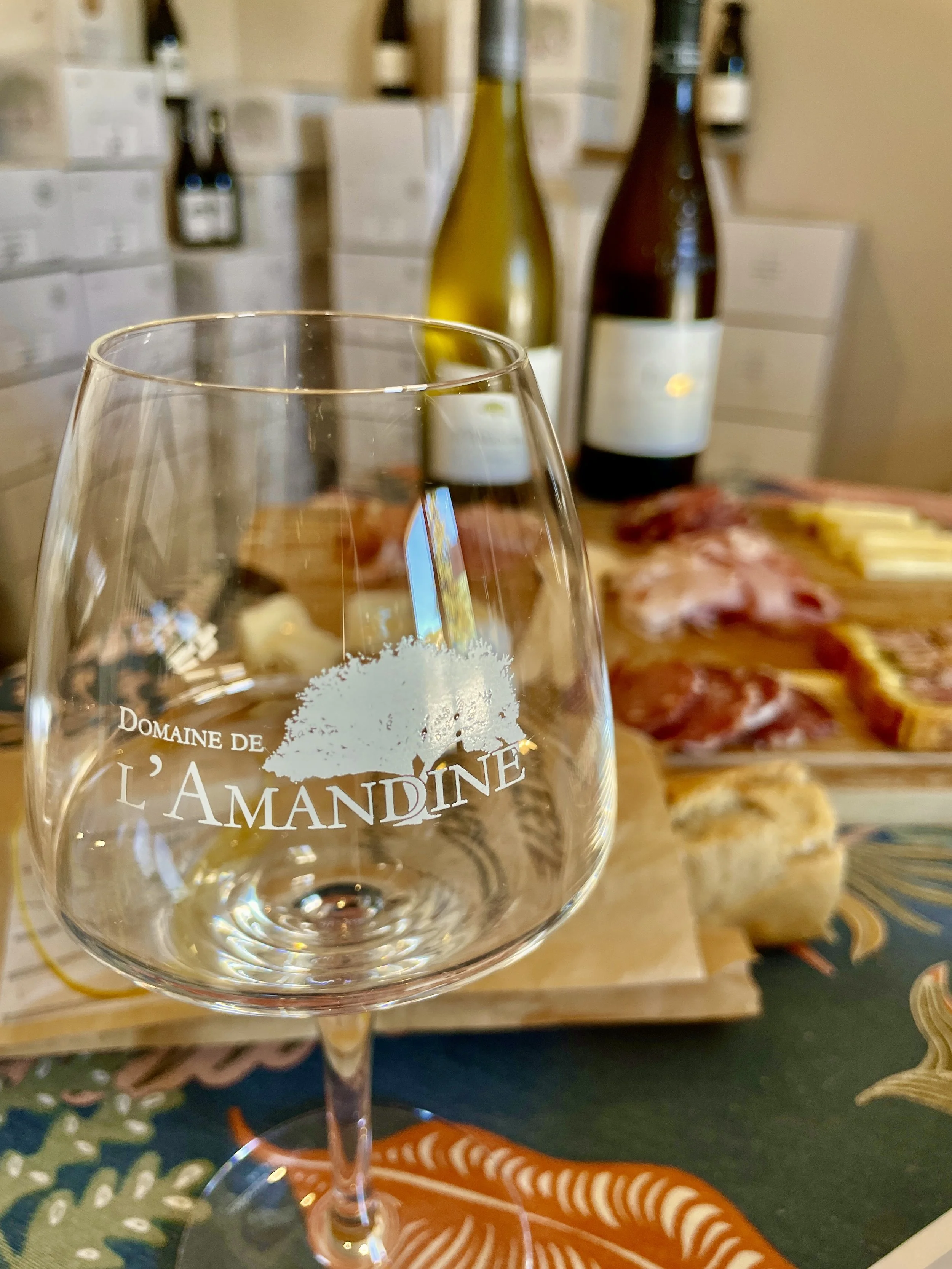
Domaine de l’Amandine began in 1968, when Jean-Pierre Verdeau and his wife, Maryse, started building something of their own from a few hectares passed down through his family. In the beginning, their name wasn’t on the bottles. The wine was sold in bulk to négociants, while the real story of the domaine took shape more quietly, in the slow expansion of the vineyards and a growing understanding of the land.
The 1980s marked a turning point, with the addition of hillside vines in Vaison-la-Romaine. Soon after, Jean-Pierre invested in a bottling machine, making it possible to release the wines under his own label for the first time. It was a subtle but meaningful shift, one that began to change how the domaine would be seen beyond its own fields.
Years later, the next generation began to find its place. Sabine and her husband, Alex, joined the domaine, though their path there was not entirely linear.
In his twenties, Alex arrived in Gigondas for what he imagined would be a brief winery internship, a meaningful but temporary chapter abroad. At the time, he didn’t speak French, and Sabine, who was working at a local boulangerie and spoke English, began helping him navigate both the language and the rhythms of daily life in the region. What started as simple acts of kindness slowly deepened into something more lasting.
Somewhere along the way, what had once felt temporary no longer was. Provence stopped feeling like a place he was simply experiencing for a season and slowly became home instead. He spent time working alongside Sabine’s family at the domaine before eventually stepping away to build his own landscape design company, a business he would go on to run for more than a decade.
Years later, they found their way back to the domaine, returning with perspectives shaped by the lives they had built beyond it. In time, their daughter Mathilde followed a similar path, coming back after her studies in viticulture and oenology to step into the family business in a way that felt both thoughtful and deeply personal.
Today, the domaine still feels unmistakably shaped by family. Each generation has left its own imprint on it over time, adding new ideas and experiences while remaining closely tied to the land and history that came before. What began with a handful of inherited vines has evolved gradually over the years, without ever losing sight of its roots.
But hearing how Alex and Sabine eventually found their way back to the domaine only made me more interested in Mathilde’s story within it. There is something quietly weighty about choosing to return to a family business, especially one so tied to tradition, history, and place. It made me wonder what it felt like to step not only into the vines themselves, but into the responsibility of shaping what the domaine would become next. I found myself anxiously awaiting the chance to begin corresponding with Mathilde and hear the rest of the story from her perspective.
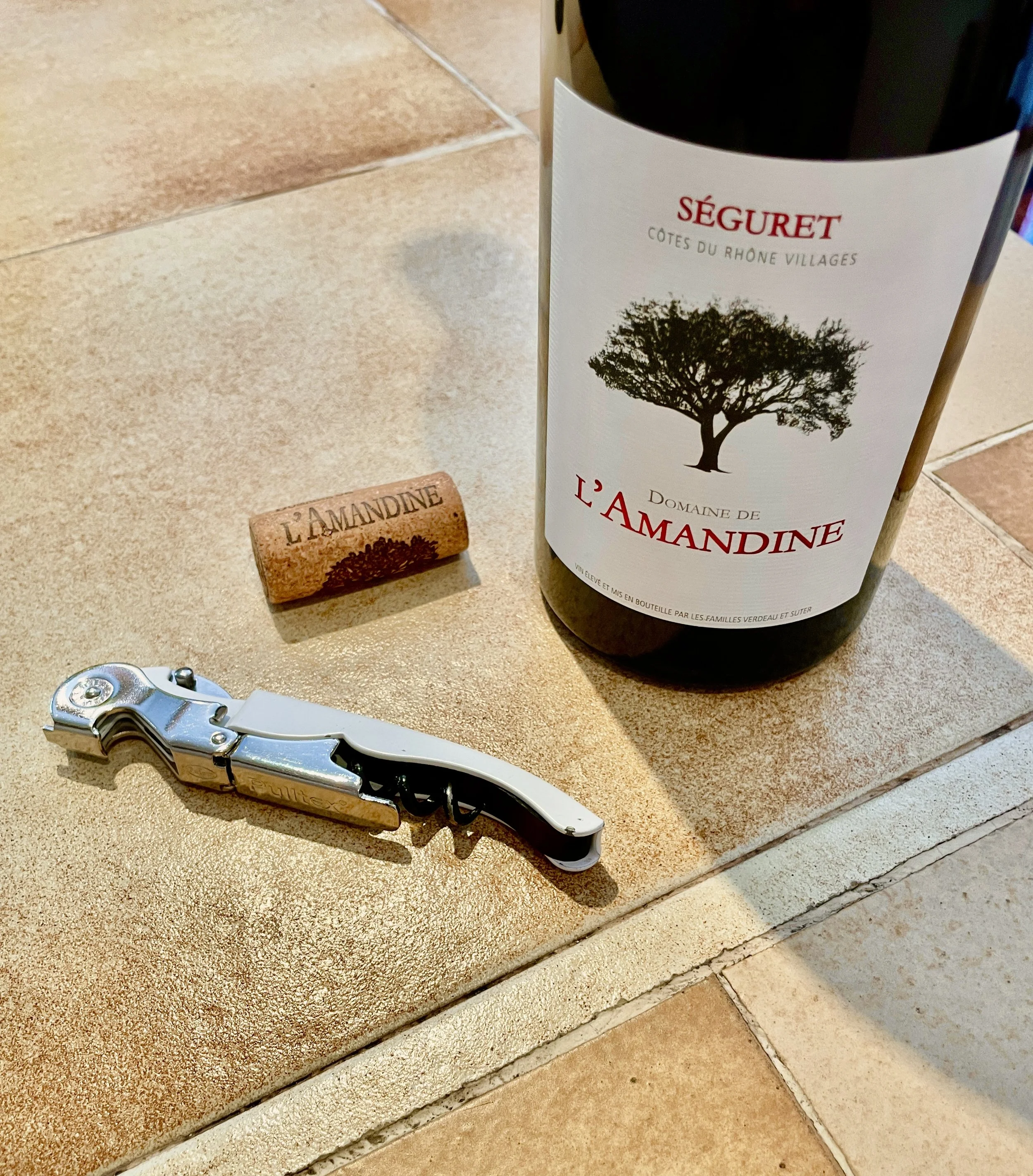
Having a mutual friend connect us brought an immediate ease to the exchange, along with a sense of trust that’s hard to manufacture otherwise. After a small back-and-forth of emails, working around the quiet exodus of August in France, when families disappear for a few weeks of rest, Mathilde and her family included, we found a moment that worked. Andy and I would visit the following week, late in the morning.
By that point, visiting domaines had become something of a rhythm, as had the questions that naturally unfold around each family’s story.
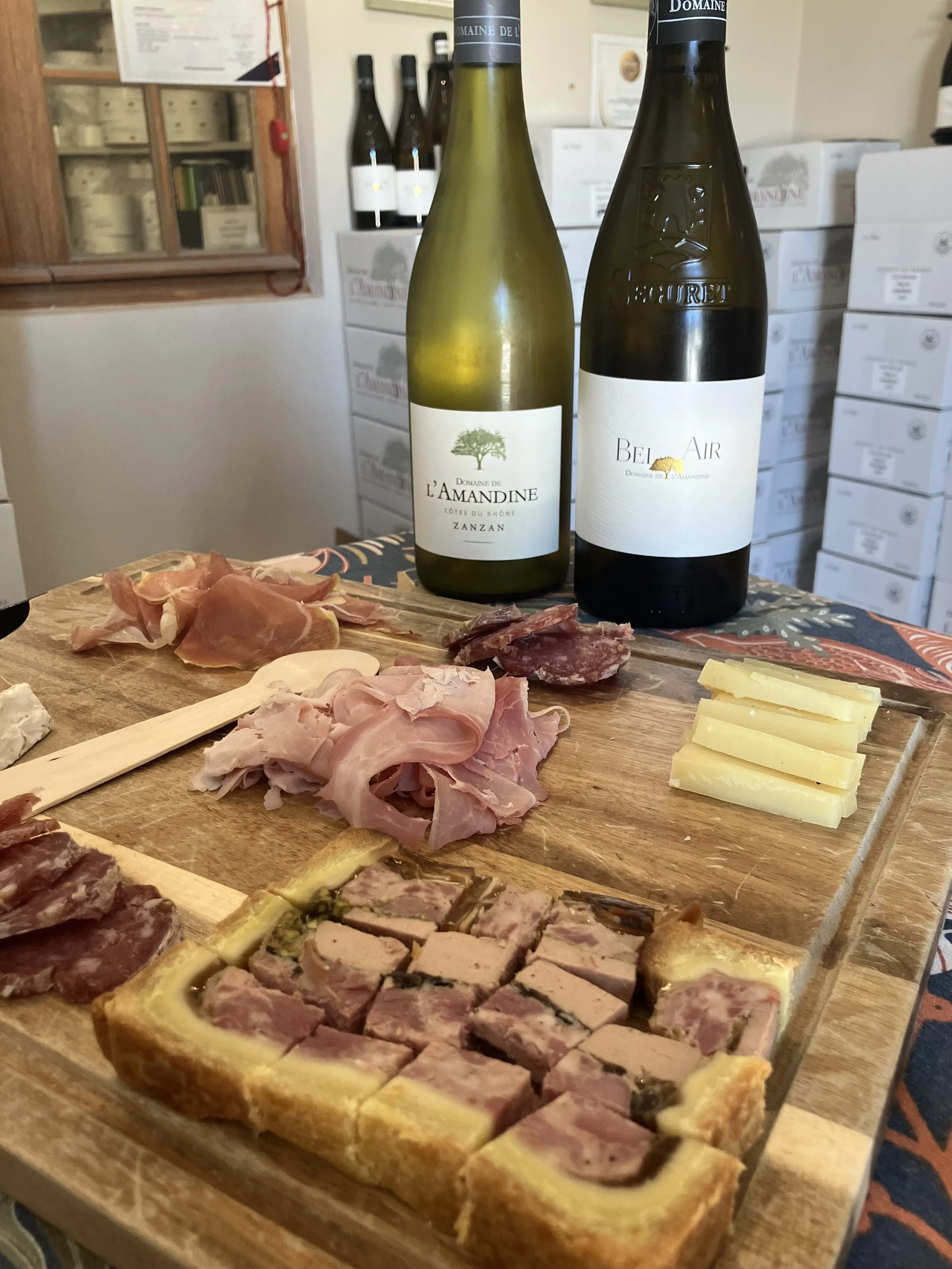
When we stepped into the tasting room, my eyes were immediately drawn to the center of the table, where a charcuterie had been thoughtfully arranged in anticipation of our visit.
“Some local meats, cheeses, and pâtés,” Mathilde explained. “I didn’t want you tasting so early on an empty stomach.”
In that moment, I felt a quiet gratitude for her thoughtfulness, along with a hint of shyness at the care she had taken for us. I am always a little aware of how things might shift when people know I will be writing about them. I find myself hoping for something simple, an experience that feels as natural as it would for any other guest. But there was something about Mathilde that felt entirely genuine. It was easy to believe this was simply how she welcomed all of her guests.
“This is so, so kind of you,” I said, stepping closer to take it all in.
Glasses were gathered and wine was poured as Mathilde began to ease into telling us how she had found her way here, in Séguret, Provence.
It was 2012, and Mathilde was in South Africa, in the middle of an internship for her studies in tourism, when the news reached her. She had chosen to be there deliberately, drawn by a quiet pull toward the place her father had once called home, the vineyards of Stellenbosch, where he had grown up on a well-known estate managed by his father, her grandfather.
She had traveled there on her own, settling into a new rhythm, warm light stretching across the vines, days shaped by her work in a tourism company, evenings softened by the familiarity of having family nearby in Cape Town. It was a different landscape, a different pace, and yet, in subtle ways, it echoed something she had always known.
It was from that distance that everything began to come into focus.
Back in Provence, her grandfather was preparing to step away, and the domaine, the same one woven into the edges of her childhood, would be sold.
From afar, the reality of it took on a different weight. The rows of vines she had known since she was young. The rhythm of harvest. The familiarity of the land. All of it suddenly felt fragile, as though it could slip quietly into someone else’s hands.
She was only 18, still in the middle of her studies, not yet in a position to return and take it on herself. But something had shifted. Being there, surrounded by another winemaking landscape, made her see more clearly what she had waiting for her at home, and how difficult it would be to let it go.
So she called her parents with a request that felt far bigger than her years at the time. Would they take over the domaine and keep it going until she was ready to return to it properly one day? She still had years of studies ahead of her, years of learning how to care for the vines, understand the land, and eventually step into the responsibility herself. In the meantime, she hoped they would hold onto it, care for it, and keep it within the family a little while longer.
They agreed.
And so, for a time, the domaine remained in their hands, quietly preserved until Mathilde was finally ready to step into a more definitive role.
I reached for a slice of cured meat from the platter, the salt and richness grounding me as I listened, her story unfolding slowly, without urgency. Outside, the light had shifted, settling softly over the vines just beyond the window.
There was a quiet steadiness in the way she spoke, as if the decision had always been there, waiting to be followed. I tried to place myself in that moment, at eighteen, and couldn’t. At that age, my own path had felt wide open, undefined and still taking shape. The idea of choosing something so early, and more than that, choosing to carry something forward, felt almost impossible to grasp.
And yet, as she spoke, it became clear that holding onto something like that doesn’t mean leaving it unchanged.
“Of course it’s not easy stepping into someone else’s shoes,” she said, pouring another wine into our glasses, the soft sound of it filling the space between us. “Especially when you start to have your own, differing opinions.”
I watched as she moved around the table, steady and assured, describing the quiet shifts they had begun to make. Like many others in the region, they had started moving away from chemical treatments, leaning instead toward more organic practices. It wasn’t a simple decision, and not one that came without hesitation. Her grandfather, shaped by a different way of working the land, hadn’t fully supported the change at first.
But over time, even that began to soften.
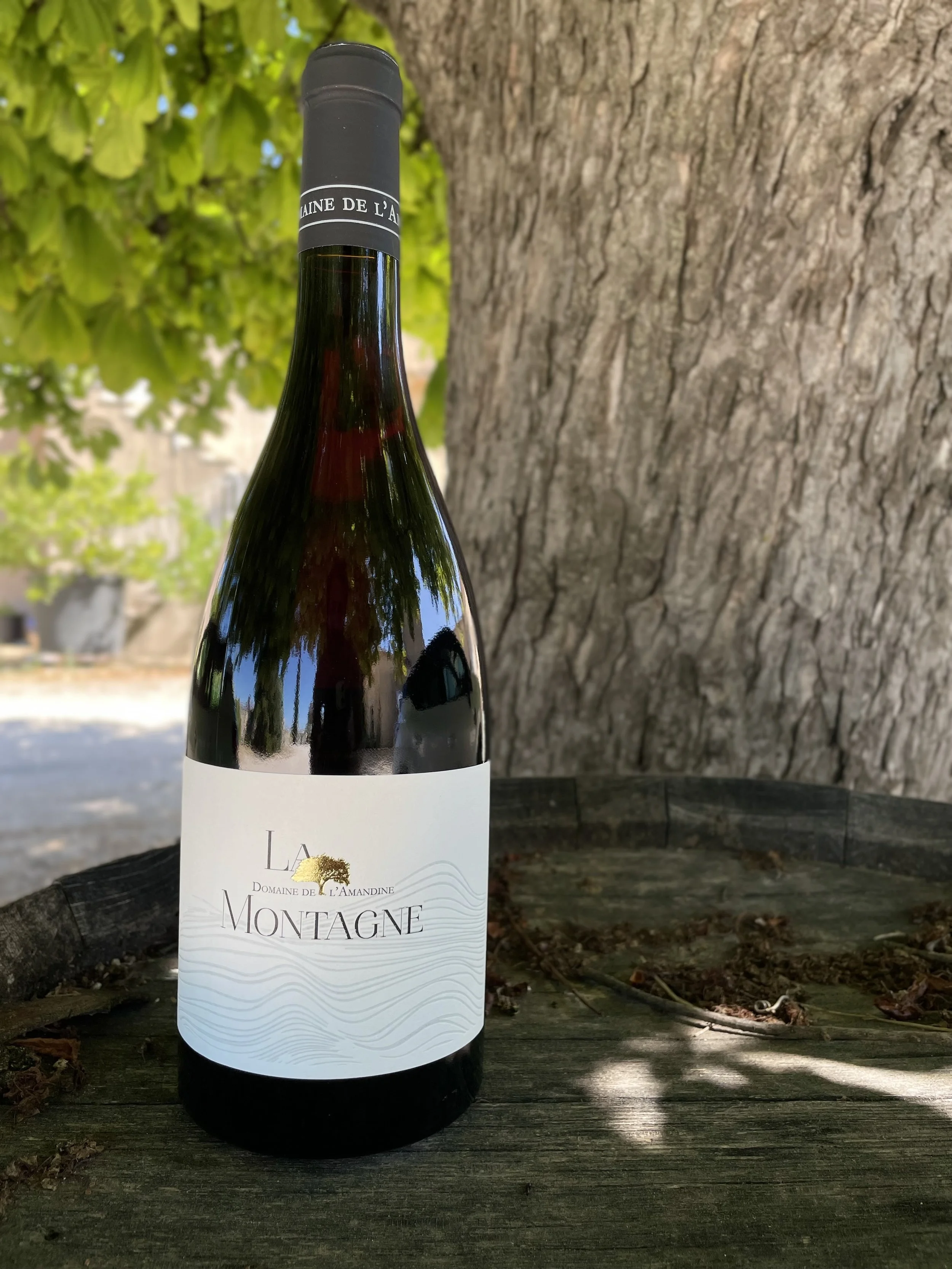
I looked around the room at the boxes of reds and whites lining the space. Even now, the domaine felt lived in, shaped as much by daily life as by the work itself. Her mother still moves between the vineyard and the cellar, and at times into the kitchen, hosting Provençal cooking classes in their home. Her parents are still very much present, a steady part of it all, especially now, as Mathilde balances the demands of the domaine with the energy of her two young daughters. Her husband, a local strawberry farmer, tends to his own fields nearby, while her siblings have chosen different paths. And so the rhythm continues, held by those who remain close to the land.
As she spoke, I drifted quietly around the room, letting my attention move across the shelves and small details that filled the space. Bottles, jars, pieces of the domaine carried beyond the vines. My hand paused at a golden bottle of olive oil, the glass catching the light as I turned it slowly in my hands.
“I’ve heard about this,” I said, glancing back toward Mathilde.
I rotated the bottle, reading the label more carefully. Our mutual friend had mentioned it in passing, the olive trees on the estate, the oil they pressed themselves, insisting I shouldn’t leave without bringing one home.
I still find myself a bit surprised when I come across something other than wine in a tasting room, though by now I should know better. And yet, each time, I’m drawn in. There’s something about it, the quiet understanding that whatever sits on those shelves has been made in small quantities, from what grows just beyond the door.
I tucked the bottle under my arm and made my way back toward the table. The platter had shifted slightly, small gaps where we had reached in for a small bite between pours, the rhythm of tasting settling in around us.
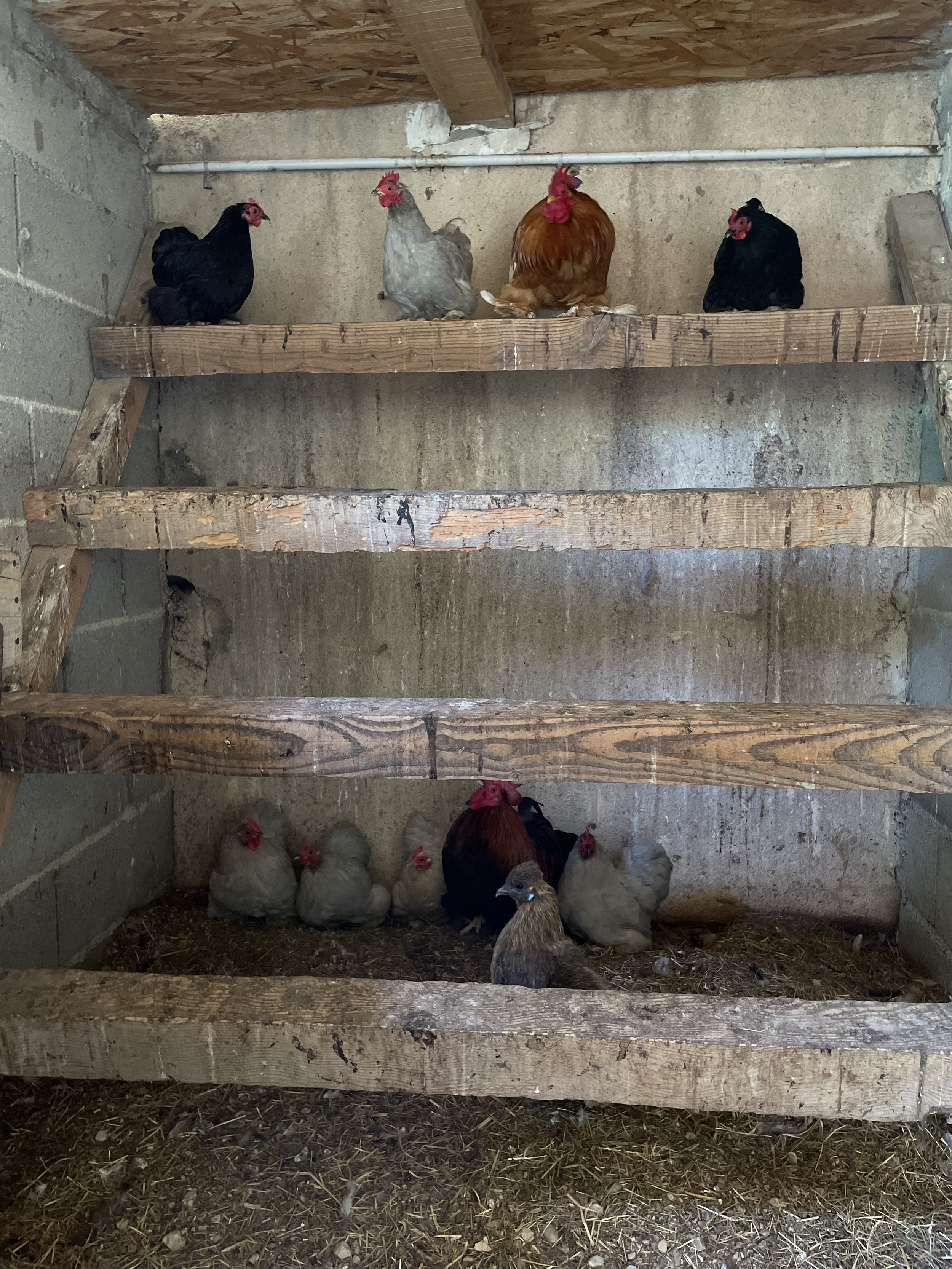
Just as I reached for my glass, a soft clucking drifted in from outside, pulling my attention toward the open door.
I turned back over my shoulder. “Do you have chickens?”
Mathilde smiled, a hint of amusement in her expression, as if this small curiosity was something she had seen before.
“Yes… would you like to go see them?”
Of course I did.
The chickens didn’t pay me much attention, fluttering lightly around their enclosure as I stepped in. I paused just inside, keeping still, letting them settle again, careful not to disturb the rhythm of their small, contained world. After a moment, I lifted my phone for a quick photo, then slipped back out, leaving them to their quiet routine.
Back inside the tasting room, the air felt still and familiar again. I picked up my bottle of olive oil, the golden glass warm in my hands.
It was the end of July, that moment in France when everything begins to shift. Conversations turn toward departure dates, shutters start to close, and there’s a quiet anticipation of escape woven into even the smallest exchanges. Mathilde and her family were preparing to leave for Corsica just days after our visit.
With that in mind, and knowing there was still so much to do before stepping away from the vines, I began to gather my things. She had already given so much of her time, her story, her attention, more than I could have expected.
Just as we began to gather ourselves, the door opened and her father stepped into the tasting room, carrying with him the warmth of the late afternoon and the scent of the vines. He had been out working all morning, and his eyes went instinctively to the table, pleased to find the charcuterie still partially intact. After introductions and exchanged handshakes, he reached for something small, settling in as he and Mathilde slipped easily into conversation, a quiet exchange about the rhythm of the vines and the work still to be done.
It felt like the natural moment to step away. We said our goodbyes, thanked her once more, and slipped out into the afternoon light, leaving them to their day. As we walked back toward the car, olive oil tucked safely in hand, I carried with me more than just the visit itself. It was the feeling of having stepped briefly into something ongoing, something that would continue long after we had left.
Visit Domaine Amandine
Visiting Provence and hoping to enjoy a wine tasting?
Mathlide + her parents would be delighted to welcome you.
Tasting and wine sales :
October to April
Monday to Friday :
8h00 – 12h00 / 13h30 – 17h30
Saturday by appointment
May to September
Monday to Friday :
8h00 – 12h30/ 13h30 – 18h00
Saturday :
09h00 – 12h30 / 13h30 – 18h00
Tel : 04 90 46 12 39
Email : info@domaine-amandine.fr